
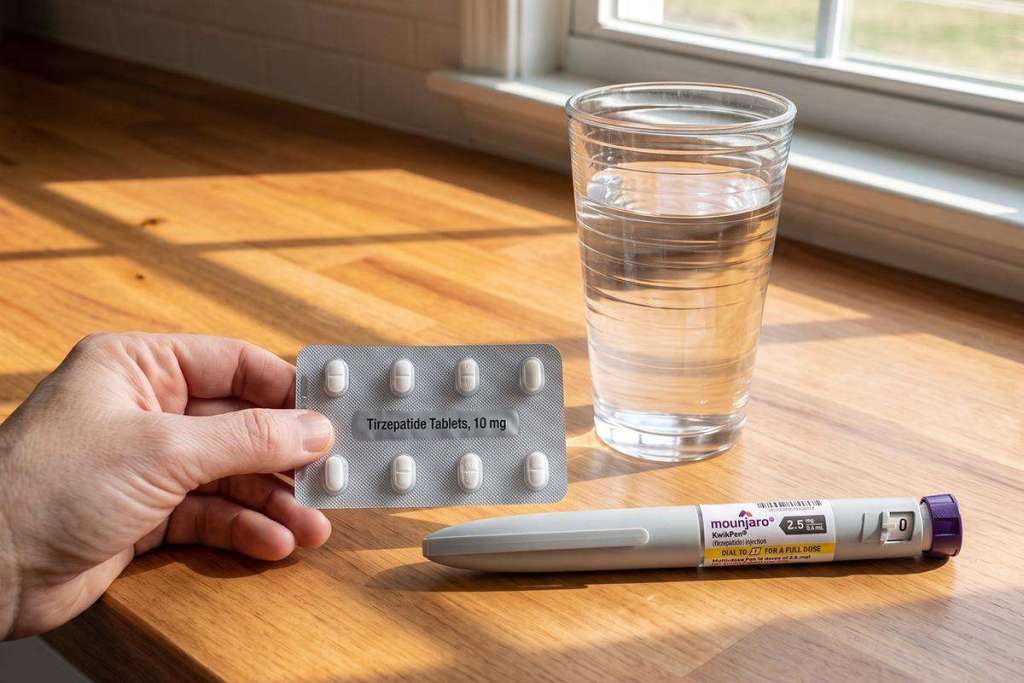
Choosing between oral tirzepatide and tirzepatide injection comes down to lifestyle, comfort level, and what matters most to each patient. Both options support weight loss by targeting the same hormones that control appetite and metabolism. The main differences involve how the medication enters the body, how often patients take it, and the strength of clinical evidence behind each form.
- What is Tirzepatide and How Does It Help With Weight Loss?
- What Are Oral Tirzepatide Tablets?
- What is Tirzepatide Injection?
- Effectiveness: How Do Results Compare?
- Bioavailability: Why Delivery Method Matters
- How Quickly Can Patients Expect to See Results?
- Side Effects You May Expect from Oral Tirzepatide Tablets and Tirzepatide Injections
- Who Should Choose Oral Tirzepatide Tablets?
- Who Should Choose Tirzepatide Injection?
- Cost Comparison: How Much does Tirzepatide Cost?
- Advantages and Disadvantages Comparison Table for Oral Tirzepatide vs Injection
- Can Patients Switch from Injection to Oral Tirzepatide?
- What Do Medical Providers Typically Recommend?
- Why Patients Choose Seattle Plastic Surgery for Tirzepatide Weight Loss Program?
- Meet Our Experts
- Conclusion
- Ready to Start Your Weight Loss Journey?
- FAQs
At Seattle Plastic Surgery, tirzepatide tablets are offered through its medical weight loss program for patients who prefer oral medication with ongoing provider support.
What is Tirzepatide and How Does It Help With Weight Loss?
Tirzepatide belongs to a class called GIP GLP-1 medication. Unlike older weight loss drugs that target only one hormone receptor, tirzepatide works on two. It mimics glucagon-like peptide-1 (GLP-1) and glucose-dependent insulinotropic polypeptide (GIP), both of which are naturally released during eating.
These hormones play several important roles. They signal the brain to reduce hunger. They slow the rate at which the stomach empties, helping patients feel full longer. Also, they help regulate blood sugar levels, which can reduce cravings and energy crashes throughout the day.
What Are Oral Tirzepatide Tablets?
When patients ask about tirzepatide oral tablet options, they are usually referring to compounded tirzepatide tablets. These sublingual tablets dissolve under the tongue, allowing the medication to be absorbed directly into the bloodstream without passing through the digestive system first.
Compounded tirzepatide tablets are prepared by specialty pharmacies rather than manufactured by pharmaceutical companies. They contain the same active ingredient as injectable tirzepatide but in a different delivery format. Patients take one tirzepatide pill daily instead of injecting once per week.
Many patients prefer oral weight loss medication simply because they dislike needles. Some find daily dosing easier to remember than a weekly schedule. Others travel frequently and find tablets more convenient to carry and store.
It is worth noting that compounded versions of tirzepatide are not FDA-approved products. The FDA has reviewed Eli Lilly’s injectable tirzepatide products, Mounjaro and Zepbound, for safety and effectiveness. Compounded formulations have not undergone the same review process. Patients considering oral tirzepatide for weight loss program options should understand this distinction and discuss it with their medical provider.
What is Tirzepatide Injection?
Injectable tirzepatide is a weekly weight-loss injection that patients administer themselves with a small needle, typically in the stomach, thigh, or upper arm. The FDA has approved tirzepatide injections for both type 2 diabetes management and chronic weight management.
Weekly dosing means patients only need to think about their medication once every seven days. Clinical trials have demonstrated significant weight loss with injectable tirzepatide, which is why many doctors consider it the gold standard for GLP-1 medication.
The injection process becomes routine for most patients after the first few weeks. Seattle Plastic Surgery provides guidance on self-administration, walking patients through the process either in person or virtually until they feel comfortable.
ALSO READ: Is Tirzepatide FSA Eligible?
Effectiveness: How Do Results Compare?
Weight Loss Outcomes
Injectable tirzepatide has the strongest evidence supporting its weight-loss results. According to PubMed Central studies show patients may lose 15 percent or more of their starting body weight over several months. Some participants in clinical trials lost more than 20 percent.
Oral tirzepatide tablets are newer, and large-scale clinical trials specifically on sublingual formulations are limited. Early reports from patients and providers suggest promising results, but the evidence base is not as extensive as what exists for injections.
Both forms use the same active ingredient, so the medication works identically once absorbed. The key question involves how effectively the body absorbs oral peptides compared to injected ones.
Appetite Control
Patients on both oral and injectable tirzepatide commonly report feeling less hungry and getting full faster. This appetite suppression is one of the main reasons tirzepatide works so well for weight loss. Fewer cravings and smaller portions make it easier to stick with a balanced eating plan.
Bioavailability: Why Delivery Method Matters
Bioavailability refers to how much of a medication actually reaches the bloodstream and becomes available for the body to use. This is where oral tirzepatide tablets and tirzepatide injection differ significantly.
When medication is injected, it bypasses the digestive system entirely. The body absorbs nearly all of the dose, and absorption rates are predictable from patient to patient.
Oral peptides face more obstacles. The digestive tract breaks down proteins, which can reduce the amount of medication that reaches the bloodstream. Sublingual tablets work around this by dissolving under the tongue, where medication can be absorbed through the tissue lining the mouth. This method improves absorption compared to swallowing a pill, but absorption rates may still vary between patients.
This difference in bioavailability is one reason injectable tirzepatide has more robust clinical data. Researchers can predict outcomes more accurately when absorption is consistent.
How Quickly Can Patients Expect to See Results?
Weight loss timelines depend on starting weight, metabolism, diet, exercise habits, and the body’s response to medication. However, general patterns tend to emerge.
During the first month, many patients notice reduced appetite and may lose a few pounds. The body is still adjusting to the medication, and dosages are typically lower during this phase.
By month three, weight loss often becomes more noticeable. Patients who have combined their medication with healthy eating and regular movement tend to see better outcomes.
By month six, cumulative weight loss may reach 10 to 15 percent of starting body weight or more for some patients. Results continue to vary based on individual factors.
Side Effects You May Expect from Oral Tirzepatide Tablets and Tirzepatide Injections
Both oral tirzepatide tablets and tirzepatide injections can cause side effects, particularly during the first few weeks while the body adjusts.
Most side effects are mild and improve within a few weeks. Starting at a lower dose and gradually increasing helps reduce discomfort. Eating smaller meals, staying hydrated, and avoiding greasy or heavy foods may also help manage digestive symptoms.
Severe side effects are rare but can include allergic reactions, severe abdominal pain, or changes in vision. Patients experiencing anything concerning should contact their provider immediately.
Who Should Choose Oral Tirzepatide Tablets?
Oral tirzepatide for weight loss may be a good fit for patients who experience significant anxiety around needles. Some people have true needle phobia that makes self-injection feel impossible. For these patients, a daily tirzepatide tablet removes a major barrier to treatment.
Frequent travelers may also prefer oral medication. Tablets are easier to pack, do not require refrigeration, and eliminate questions about carrying needles through airport security.
Busy professionals sometimes find daily dosing easier to incorporate into their routine than remembering a specific weekly injection day. Taking a sublingual tablet each morning can become automatic, like brushing teeth.
Patients who choose oral tirzepatide should do so under medical supervision with a clear understanding that compounded formulations have less clinical data than FDA-approved injections.
Who Should Choose Tirzepatide Injection?
Patients who want the strongest evidence behind their treatment may prefer injectable tirzepatide. Clinical trials have demonstrated its safety and effectiveness, and the FDA has approved it for weight management.
Weekly dosing appeals to patients who do not want to think about medication every day. One injection per week feels manageable for many people, especially once the initial learning curve passes.
Those comfortable with self-injection after proper training often find the process straightforward. The needles are small, similar to those used by diabetic patients for insulin, and discomfort is typically minimal.
Cost Comparison: How Much does Tirzepatide Cost?
Cost is a real consideration for anyone exploring medical weight loss options.
At Seattle Plastic Surgery, the tirzepatide tablet program is $549 per month. This includes the medication, consultation, monthly follow-up appointments, diet and exercise guidance, and 24/7 access to on-call doctors.
At Seattle Plastic Surgery, injectable tirzepatide starts at $349 for months one and two, when dosages are lower during the titration phase. From month three onward, the cost increases to $449 per month as patients move to higher dosages. This also includes medication, consultations, follow-ups, lifestyle guidance, and around-the-clock access to providers.
Insurance coverage for weight loss medications remains inconsistent. Most plans do not cover compounded tirzepatide tablets. Coverage for brand-name injectable tirzepatide varies by plan and often requires documentation of medical necessity.
Advantages and Disadvantages Comparison Table for Oral Tirzepatide vs Injection
|
Aspect |
Oral Tirzepatide Tablets | Tirzepatide Injection |
| Needle Required | No |
Yes |
|
Administration Frequency |
Daily | Once per week |
| Travel Friendly | Very convenient |
Requires cool storage |
|
Clinical Evidence |
Limited (compounded) | Strong (FDA-approved) |
| FDA Approval Status | Not approved for weight loss |
FDA-approved for weight management |
|
Absorption Predictability |
Variable between patients | Consistent and predictable |
| Injection Site Reactions | N/A |
Possible redness or soreness |
|
Best for |
Needle-averse patients | Patients prioritizing proven results |
| Storage Requirements | Room temperature |
Refrigeration needed |
|
Cost Range |
Around $549/month | $349-$449/month |
| Ideal candidates | Busy professionals, travelers |
Patients seeking established evidence |
Can Patients Switch from Injection to Oral Tirzepatide?
Some patients start with injections and later consider switching to tirzepatide tablets. This transition is possible, but it should always occur under medical supervision.
Providers typically need to adjust dosages when changing administration methods. Since absorption differs between injection and oral formulations, the dose that worked for injections may not translate directly to tablets.
Switching mid-treatment also requires monitoring to ensure weight loss continues and side effects remain manageable. Patients should discuss any desire to change formats with their weight loss provider before making adjustments.
What Do Medical Providers Typically Recommend?
Most doctors currently recommend injectable tirzepatide as the primary option because of its extensive clinical evidence. FDA approval means the medication has been reviewed for safety, quality, and effectiveness through rigorous trials.
However, providers recognize that not every patient can or will use injections. For patients with needle phobia or strong preferences for oral GLP-1 medication, compounded tirzepatide tablets offer an alternative worth considering with appropriate counseling about the differences in evidence.
Medical supervision matters regardless of which format patients choose. Working with a provider who monitors progress, adjusts dosages, and provides ongoing support increases the likelihood of successful, sustainable weight loss.
Why Patients Choose Seattle Plastic Surgery for Tirzepatide Weight Loss Program?
Seattle Plastic Surgery offers a medically supervised oral tirzepatide weight-loss program designed around each patient’s needs. The program includes compounded sublingual tirzepatide tablets, personalized tirzepatide dosage plans, monthly consultations with weight loss providers, and comprehensive diet and exercise guidance.
At $549 per month, the program provides ongoing medical oversight to help patients stay on track and address concerns as they arise. The 24/7 on-call doctors ensure patients have access to support whenever questions come up, not just during office hours.
For patients who prefer avoiding injections, this program removes a common barrier to starting medical weight loss. The convenience of daily tablets, combined with professional guidance, creates a structured path toward weight-loss goals.
Seattle Plastic Surgery also offers injectable tirzepatide for patients who prefer that format, allowing patients to choose what works best for their lifestyle after discussing options with a provider.
Meet Our Experts
Dr. Tarak Patel is a plastic and reconstructive surgeon with expertise spanning a wide range of cosmetic and reconstructive procedures. He is double board certified in plastic surgery and general surgery, bringing advanced training and clinical experience to his practice. He is committed to helping each patient achieve their goals while ensuring a safe, comfortable, and supportive treatment experience.
Dr. Craig Jonov is a board-certified cosmetic surgeon with over 20 years of experience in breast, body, and facial procedures across Seattle and the surrounding area. His surgical facility is fully JCAHO-accredited, meaning it meets the same safety and operational standards applied to hospital settings.
Both doctors bring extensive experience and a commitment to personalized treatment. Their involvement in weight loss programs ensures that patients receive medical guidance from experienced, qualified physicians who understand the full spectrum of body transformation, from medical weight loss to surgical body contouring.
Conclusion
The decision between oral tirzepatide tablets and tirzepatide injection depends on individual priorities.
Patients who value established clinical evidence and are comfortable with self-injection may find weekly tirzepatide injections the most straightforward choice. Also, patients who strongly prefer avoiding needles or find daily dosing easier to manage may do well with oral tirzepatide tablets through a supervised medical program.
Either way, medical supervision makes a significant difference. Working with providers who monitor progress, adjust treatment as needed, and offer lifestyle support helps patients achieve better long-term results than medication alone.
Ready to Start Your Weight Loss Journey?
Schedule a free consultation with the weight loss team at Seattle Plastic Surgery. Call 206-324-1120 to book your appointment.
FAQs
Is oral tirzepatide as effective as injections for weight loss?
Oral tirzepatide contains the same active ingredient as the injectable formulation, but absorption from sublingual tablets may vary among patients. Injectable tirzepatide has more clinical evidence demonstrating effectiveness. Oral tirzepatide may work well for many patients, though individual results can differ.
Does oral tirzepatide really work?
Many patients report appetite reduction and weight loss while taking oral tirzepatide tablets. However, clinical trials for sublingual tirzepatide formulations are limited compared with those for injectable formulations. Results depend on absorption, dosage, and lifestyle factors.
How much weight can patients lose on tirzepatide?
Clinical trials of injectable tirzepatide show average weight loss of 15 to 20 percent of body weight over 72 weeks. Individual results vary based on starting weight, diet, exercise, and the body’s response to medication.
Are tirzepatide tablets FDA-approved?
Compounded tirzepatide tablets are not FDA-approved. The FDA has approved Eli Lilly’s injectable tirzepatide products, Mounjaro and Zepbound, for specific uses. Compounded versions are prepared by specialty pharmacies and have not undergone FDA review for safety and effectiveness.
Can patients switch from tirzepatide injections to tablets?
Switching is possible under medical supervision. Providers typically adjust dosages when changing routes of administration because absorption differs between injection and oral routes. Patients should discuss any changes in their weight with their weight-loss provider.
Who should not take tirzepatide?
Patients with a personal or family history of medullary thyroid carcinoma or Multiple Endocrine Neoplasia syndrome type 2 should not take tirzepatide. Those with severe gastrointestinal disorders or previous allergic reactions to tirzepatide are also not candidates.
How long before patients see results from tirzepatide?
Most patients notice reduced appetite within the first few weeks. Visible weight loss often becomes apparent by months two or three. Significant results typically accumulate over six months or longer with consistent use and lifestyle changes.
How much does oral tirzepatide cost monthly?
At Seattle Plastic Surgery, oral tirzepatide tablets cost $549 per month, including medication, consultations, follow-ups, and diet and exercise guidance. Costs may vary at other providers.
Can patients travel with tirzepatide tablets?
Tirzepatide tablets are generally easier to travel with than injections. They do not require refrigeration or needles, making them convenient for patients who travel frequently.

Dr. Craig Jonov is a board-certified cosmetic surgeon based in Lynnwood, serving the Seattle area. With extensive training in facial, breast, and body procedures, he combines surgical expertise with artistic precision to achieve natural-looking results. Dr. Jonov also specializes in advanced injectable treatments and non-surgical rejuvenation techniques. Recognized for his commitment to safety and innovation, he is an active member of leading cosmetic surgery organizations and is dedicated to providing personalized care tailored to each patient’s goals.