
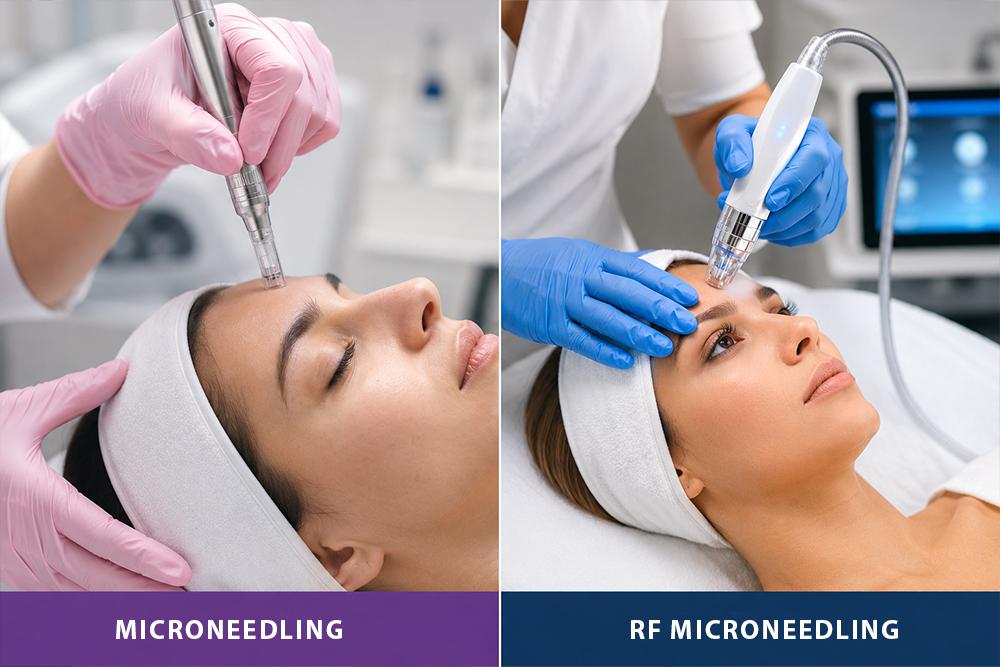
Both microneedling and RF microneedling can improve skin appearance, but neither treatment is automatically better for everyone. Traditional microneedling may be enough to address uneven skin texture, fine lines, enlarged pores, and mild scarring. RF microneedling may be considered when skin firmness or deeper collagen remodeling is also a concern.
- Microneedling vs Radiofrequency Microneedling
- What is Microneedling?
- What Is RF Microneedling?
- Traditional Microneedling vs RF Microneedling: Key Differences
- Which is Better Microneedling or RF Microneedling?
- Is RF Microneedling Safe?
- Can Microneedling or RF Microneedling Cause Hyperpigmentation?
- What Is Recovery Like After Microneedling vs RF Microneedling?
- Who is a Good Candidate for Microneedling or RF Microneedling?
- Microneedling in Seattle: What Should You Look For?
- Microneedling at Seattle Plastic Surgery
- Meet Our Experts
- Choosing the Right Microneedling Treatment Starts With Expert Guidance
- FAQs
The main difference lies in how each treatment works. Microneedling uses tiny needles to stimulate the skin’s repair process and promote new collagen production. RF microneedling adds radiofrequency energy beneath the skin, creating controlled heat at targeted depths. The choice comes down to the skin concern, treatment goal, and settings that best suit the individual.
Microneedling vs Radiofrequency Microneedling
Before diving deeper, here is a quick comparison of these two microneedling vs radiofrequency microneedling treatments:
|
Feature |
Microneedling |
RF Microneedling |
| Main technology |
Tiny needles |
Tiny needles + RF energy |
| Main goal |
Mechanical collagen stimulation |
Mechanical stimulation + controlled heat |
| Skin texture |
✓ |
✓ |
| Fine lines |
✓ |
✓ |
| Acne scars |
✓ |
✓ |
| Enlarged pores |
✓ |
✓ |
| Skin tightening |
Mild to modest |
More focused on tightening |
| Heat involved |
No |
Yes |
| Microneedling Downtime |
Short |
Short but varies |
| Cost |
Lower |
Higher |
| Best for |
Surface-level texture concerns and collagen stimulation |
Selected concerns involving texture, laxity, and deeper remodeling |
What is Microneedling?
Microneedling is a skin treatment that has been around for years and remains popular for its ability to refresh skin without major downtime.
How Microneedling Works
During a microneedling treatment, a sterile device creates hundreds of tiny punctures through the outermost layer of skin. These micro-injuries are nearly painless, especially with numbing cream applied beforehand. Once the skin senses these small wounds, the body’s healing response kicks in.
Fibroblasts, the cells responsible for making collagen, get to work producing fresh collagen fibers. Over time, this leads to smoother skin as new tissue replaces older, damaged skin. Results develop rather than appearing overnight. Most people notice improvements over several weeks and months as collagen remodeling continues.
What Can Microneedling Improve?
Traditional microneedling can help with several common skin concerns:
- Uneven skin texture often responds well to microneedling because the treatment encourages cell turnover.
- Fine lines may appear softer as new collagen fills in the skin.
- Acne scars, particularly mild to moderate ones, can become less noticeable over a series of treatments.
- Enlarged pores may look smaller as the surrounding skin becomes firmer.
- Mild sun damage and certain types of scarring, including stretch marks, can also benefit from this approach.
What Is RF Microneedling?
RF microneedling takes the traditional microneedling concept and adds another layer: radiofrequency energy.
How RF Microneedling Works
Like standard microneedling, RF microneedling uses tiny needles that enter the skin. However, once the needles reach the targeted depth, they release radiofrequency energy. This energy creates controlled heat at specific levels beneath the skin’s surface.
The heat triggers additional collagen remodeling beyond what mechanical stimulation alone provides. Think of it as combining two different approaches to stimulate the skin’s healing response.
What Does RF Add to Microneedling?
The component may offer RF microneedling benefits for certain concerns that standard microneedling addresses less directly.
- Skin firmness and mild to moderate laxity may respond to the deeper heat-based collagen remodeling.
- Selected acne scars, particularly deeper ones, may benefit from the combination of mechanical and thermal stimulation.
- Microneedling for wrinkles and overall skin texture can also be treatment targets.
Traditional Microneedling vs RF Microneedling: Key Differences
Understanding the specific difference between microneedling and RF microneedling helps clarify which approach might be best suited to different situations.
Technology
Traditional microneedling relies entirely on mechanical stimulation. The needles create micro-injuries, and the body does the rest through its natural healing process. RF microneedling adds radiofrequency energy to this mechanical action, introducing controlled thermal injury alongside the physical punctures.
Depth and Energy
RF microneedling allows providers to deliver energy at targeted depths within the skin. This is not the same as simply using longer needles. The radiofrequency component produces a different type of tissue response than needles alone do. Treatment settings, including needle depth and energy levels, significantly affect outcomes and should be customized for each patient.
RF Microneedling for Skin Tightening
When skin firmness or mild laxity is a primary concern, RF microneedling may be considered, as the thermal energy can promote deeper collagen contraction and remodeling. Traditional microneedling offers modest tightening benefits but primarily targets surface-level texture improvements.
Skin Texture and Scarring
To address RF microneedling for acne scars, pores, and uneven texture. Neither wins for every scar type. Shallow, rolling scars may respond well to traditional microneedling, while certain deeper scars might benefit from the added RF energy. A proper assessment helps determine which approach makes sense for specific scarring patterns.
Downtime and Recovery
Recovery varies based on treatment intensity, skin type, and individual healing. Generally, both treatments involve relatively short microneedling downtime compared to more aggressive procedures. Most people experience redness, mild swelling, and skin sensitivity for a few days. RF microneedling downtime can vary more widely because treatment settings affect how the skin responds.
Cost
RF microneedling costs more than traditional microneedling. The technology involved, including the devices and specialized tips, contributes to higher treatment fees. For patients whose concerns can be addressed with standard microneedling, the lower cost may be an advantage.
Which is Better Microneedling or RF Microneedling?
This question gets asked constantly, and the answer remains the same: it depends on what someone is trying to achieve.
Microneedling May Be Better If the Main Goal Is:
Improving skin texture without adding radiofrequency energy makes traditional microneedling a sensible choice for many people. Reducing the appearance of fine lines, improving mild acne scarring, and minimizing enlarged pores are all within the scope of standard microneedling. Some patients prefer a simpler treatment approach or want to stimulate collagen without the thermal component.
RF Microneedling May Be Better If the Main Goal Is:
Improving skin firmness alongside texture concerns may point toward RF microneedling. Addressing mild skin laxity, treating certain deeper scars, and seeking more focused collagen remodeling are reasons patients consider this option. The combination of mechanical and thermal stimulation appeals to those seeking both effects in a single treatment.
When Neither Treatment May Be the Best Choice
Microneedling and RF microneedling are not the right fit for every concern. If the skin has significant laxity, a surgical procedure may provide more noticeable lifting than either treatment. Severe or complex microneedling for acne scars may respond best to a combination of treatments rather than microneedling alone.
Is RF Microneedling Safe?
RF microneedling can be a safe treatment when performed by a qualified provider with the right device and settings. Because the treatment uses both needles and radiofrequency energy, treatment depth and energy levels need careful control.
In October 2025, the FDA warned about serious complications reported with certain uses of RF microneedling, including burns, scarring, fat loss, changes in appearance, and nerve damage. The FDA recommends that the treatment be performed by a licensed healthcare provider with appropriate training and experience.
These complications are not expected with every treatment. The FDA warning does, however, show why proper technique, suitable treatment settings, infection control, and provider experience are important. The American Academy of Dermatology also stresses the need for medical expertise when RF microneedling is performed.
Can Microneedling or RF Microneedling Cause Hyperpigmentation?
Yes, both treatments may cause hyperpigmentation in some people. The skin can become inflamed after microneedling, and that inflammation may lead to darker spots as the skin heals. With RF microneedling, the added heat can also affect the skin, so treatment settings need careful attention.
Skin type can affect risk, with pigmentation changes more common among people with darker skin tones. Stronger treatment settings, sun exposure, and poor aftercare may also increase the chance of dark spots. Following the recommended aftercare and protecting the skin from the sun can help reduce the risk.
A proper skin assessment before treatment can help identify pigmentation concerns and guide the choice of treatment and settings.
What Is Recovery Like After Microneedling vs RF Microneedling?
Recovery can vary based on the treatment, skin sensitivity, needle depth, and treatment settings. Common effects for Seattle microneedling may include:
Microneedling Recovery
- Redness that may look similar to a mild sunburn
- Mild swelling or skin sensitivity
- Temporary dryness or light flaking
- Skin may feel warm or tight for a short time
- Many patients can return to normal activities soon after treatment
- About 1 to 2 days of recovery, although individual healing may take longer
RF Microneedling Recovery
- Redness and mild swelling
- Warmth or tenderness in the treated area
- Temporary pinpoint marks
- Mild sensitivity as the skin heals
- Recovery may vary depending on the needle depth and RF energy used
- About 24 to 48 hours of recovery, but this is not a guarantee for every patient
Who is a Good Candidate for Microneedling or RF Microneedling?
- Uneven texture, fine lines, enlarged pores, or mild acne scars: Traditional microneedling may be considered for these concerns.
- Mild skin laxity or loss of firmness: RF microneedling may be considered when tightening is also a treatment goal.
- Active skin problems: Treatment may need to wait if there is an infection, open wound, active acne flare, or significant irritation in the area.
- History of keloids or abnormal scarring: This should be discussed before treatment because it may affect candidacy.
- Pigmentation concerns: A history of hyperpigmentation may affect treatment settings and the approach used.
- Certain medications: Blood thinners and some acne medications may affect whether treatment is appropriate.
- Realistic treatment goals: Microneedling may improve the appearance of certain skin concerns, but it cannot correct significant loose skin or all types of acne scars.
Microneedling in Seattle: What Should You Look For?
When considering Microneedling Seattle options, the provider and treatment plan matter as much as the device. A medical-grade device, sterile treatment supplies, appropriate needle depth, careful skin assessment, and clear aftercare instructions can all contribute to safer treatment.
The same applies when comparing RF microneedling vs. microneedling. Looking only at the technology may not give a complete picture. Treatment technique, settings, skin condition, and the provider’s experience all matter.
For anyone researching microneedling in Seattle, it can also help to ask what device will be used, who will perform the procedure, how treatment depth is selected, and what recovery may look like.
Microneedling at Seattle Plastic Surgery
If you are considering microneedling in Seattle, the right treatment depends on your skin concerns, goals, and the level of correction you want. Seattle Plastic Surgery offers professional microneedling treatment Seattle designed to support collagen production and improve the appearance of concerns such as uneven texture, fine lines, and scarring.
The practice provides detailed information about treatment time, recovery expectations, pricing, and the professional microneedling techniques used during each session. Patients in the Seattle and Tacoma area can schedule a consultation to discuss whether traditional microneedling or RF microneedling aligns better with their individual skin goals.
Microneedling is $300 for a single treatment and $697 for a package of three, with a treatment time of 30 to 60 minutes and a recovery time of 1 to 2 days. RF microneedling is $400 for a single session and $1,100 for a package of three sessions; RF microneedling plasma is $500 for a single session and $1,400 for a package of three sessions. The procedure time is 1 hour, with a recovery time of 24 to 48 hours.
Meet Our Experts
Dr. Tarak Patel is a double board-certified plastic and reconstructive surgeon with extensive experience in cosmetic and reconstructive care. His background in plastic surgery supports a detailed approach to evaluating skin concerns, treatment goals, and the level of correction a patient may be seeking.
Dr. Craig Jonov is a board-certified cosmetic surgeon with more than 20 years of experience. His experience in cosmetic care allows patients to discuss concerns such as skin texture, scarring, and changes in skin firmness when considering nonsurgical treatment options.
At Seattle Plastic Surgery, treatment selection starts with understanding the skin concern rather than simply choosing the newest technology. For patients comparing microneedling with RF microneedling, an evaluation can help determine which treatment best matches the skin’s condition, desired improvement, and expected recovery.
Choosing the Right Microneedling Treatment Starts With Expert Guidance
The right treatment is not simply a matter of choosing between traditional microneedling and RF microneedling. It depends on the skin concern, treatment goals, and the extent of correction needed. Seattle Plastic Surgery offers personalized microneedling treatments in Seattle to help determine which approach may be the better fit.
Call 206-338-5299 to schedule a consultation and take the next step.
FAQs
Is microneedling better than RF microneedling?
Neither treatment is universally better. The appropriate option depends on each patient’s skin concerns and treatment goals. Traditional microneedling works well for texture and mild scarring, while RF microneedling may be considered when firmness or deeper remodeling is desired.
Is RF microneedling more effective than regular microneedling?
RF microneedling delivers controlled radiofrequency energy, which may be useful for certain concerns, such as laxity. However, effectiveness depends on the specific condition being treated and the treatment settings used. More technology does not automatically mean better results for every person.
Is RF microneedling more painful than microneedling?
Sensation varies between individuals. Both treatments typically use topical numbing cream to improve comfort. RF microneedling may feel slightly different because of the heat component, but most patients tolerate both treatments well.
Which is better for acne scars microneedling or RF microneedling?
Both can be used for acne scarring. Scar type, depth, and skin characteristics all influence which approach is most likely to work. Shallow scars may respond to traditional microneedling, while deeper scars might benefit from RF energy.
Which treatment has less downtime?
Both generally involve short recovery periods. Traditional microneedling often has slightly more predictable downtime. RF microneedling recovery can vary more depending on treatment intensity and settings.
How long do microneedling results last?
Results from microneedling develop over time as collagen remodeling occurs. Improvements can last months to over a year, though collagen naturally breaks down with aging. Maintenance treatments may help sustain results.
Can RF microneedling cause fat loss?
Yes, inappropriate or excessively deep RF treatment has been associated with reported fat loss in treated areas. The FDA included fat loss among complications reported with RF microneedling devices. This is one reason treatment technique, appropriate settings, and provider expertise matter significantly.
Can you switch between microneedling and RF microneedling?
Treatment plans can vary based on patient goals and how skin responds. Some people start with traditional microneedling and later consider RF microneedling results. Others may alternate treatments. An individualized assessment helps determine what makes sense for each situation.

Dr. Craig Jonov is a board-certified cosmetic surgeon based in Lynnwood, serving the Seattle area. With extensive training in facial, breast, and body procedures, he combines surgical expertise with artistic precision to achieve natural-looking results. Dr. Jonov also specializes in advanced injectable treatments and non-surgical rejuvenation techniques. Recognized for his commitment to safety and innovation, he is an active member of leading cosmetic surgery organizations and is dedicated to providing personalized care tailored to each patient’s goals.