
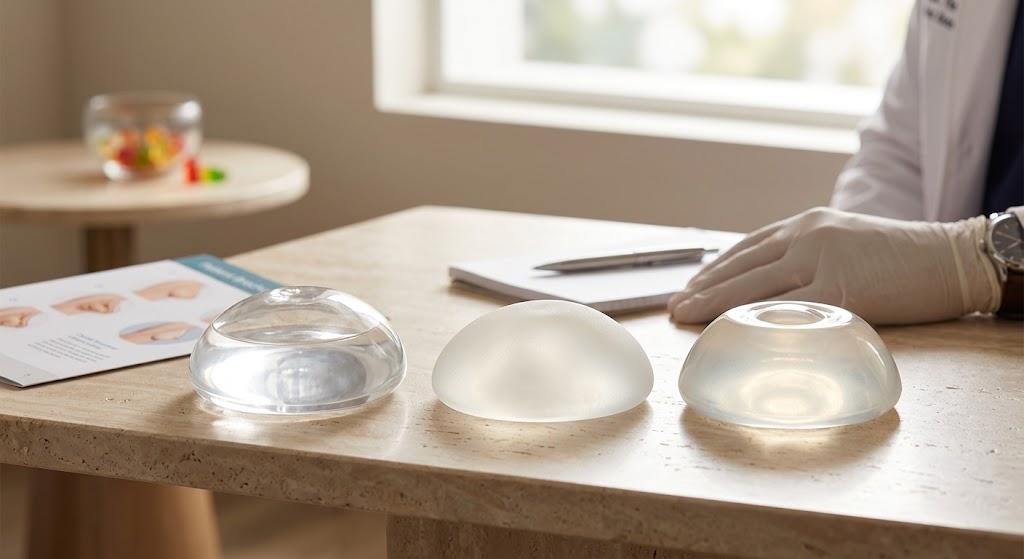
Choosing implants is one of the biggest decisions in breast augmentation. Many patients start their research believing there is a single “best” option, but the truth is more practical. The right choice depends on body type, existing breast tissue, lifestyle, desired appearance, and the surgeon’s professional recommendation. What works beautifully for one patient may not suit another.
- Understanding Breast Implants
- The Three Main Types of Breast Implants
- Saline vs. Silicone vs. Gummy Bear Implants
- Which Breast Implant Feels the Most Natural?
- Which Breast Implant Looks the Most Natural?
- Which Breast Implant Lasts the Longest?
- Safety Comparison
- Pros and Cons of Each Implant Type
- Questions to Ask Your Plastic Surgeon Before Choosing Breast Implants
- How Seattle Plastic Surgery Helps Patients Choose the Right Implant
- Who Is a Good Candidate for Each Implant?
- How Much Do Breast Implants Cost?
- What Does Recovery Look Like?
- Can Breast Implants Be Replaced Later?
- Choosing the Right Breast Implant Starts With Expert Guidance
For this reason, patients considering breast augmentation in Seattle benefit from a personalized evaluation rather than a one-size-fits-all approach. This guide breaks down each implant type so you can walk into your consultation informed and confident.
Understanding Breast Implants
Every breast implant consists of two components: a durable silicone outer shell and an inner filling. The filling material is what distinguishes one implant type from another. All modern breast implants used in the United States are FDA-approved and have undergone extensive testing for safety, durability, and performance.
Today’s implants are significantly more advanced than earlier generations. Stronger shells, improved silicone gels, and lower rupture rates provide patients with safer, longer-lasting options that produce increasingly natural-looking results.
If you’re researching breast implant options in Seattle, learning the differences between implant types is one of the first steps toward making an informed decision.
The Three Main Types of Breast Implants
Saline Implants
Saline implants use a silicone shell filled with sterile saltwater after the implant is placed. Because the implant is inserted empty, surgeons can often use a smaller incision and fine-tune the implant volume during surgery.
Saline implants are FDA-approved for patients 18 years and older.
Benefits
- Smaller incision
- Adjustable implant volume
- Immediate rupture detection through visible deflation
- Sterile saline is naturally absorbed by the body
- Lower overall cost
Drawbacks
- Firmer feel
- Higher chance of rippling in patients with thin breast tissue
Silicone Implants
Silicone implants are filled with a cohesive silicone gel that closely resembles the feel of natural breast tissue. These are FDA-approved implants for patients 22 years and older, that feels natural. This is why silicone implants remain the most popular choice for breast augmentation today.
In the saline vs. silicone implant comparison, the primary difference comes down to feel. Silicone gel moves more naturally than saline.
Because silicone ruptures are not always immediately noticeable, the FDA recommends periodic MRI or ultrasound imaging to monitor implant integrity.
Benefits
- Soft, natural feel
- Natural movement
- Excellent long-term aesthetic results
Drawbacks
- Larger incision
- Periodic imaging recommended
- Approved for patients age 22+
Gummy Bear Breast Implants
Gummy bear implants contain a highly cohesive, form-stable silicone gel that maintains its shape even if the implant shell is damaged. These implants are manufactured in an anatomical teardrop shape that closely mimics the natural slope of the breast. Their firmer consistency also reduces the chance of gel migration after rupture.
Benefits
- Excellent shape retention
- Lower leakage risk
- Anatomical contour
- Highly durable
Drawbacks
- Higher cost
- Largest incision
- Firmer feel than traditional silicone
Saline vs. Silicone vs. Gummy Bear Implants
|
Feature |
Saline Implants | Silicone Implants |
Gummy Bear Implants |
| Feel |
Firmer |
Soft and natural | Firm and structured |
|
Appearance |
Round with fuller upper pole | Soft, natural contour |
Anatomical teardrop shape |
| Incision Size |
Smaller |
Larger |
Largest |
| Rupture Detection |
Immediate due to visible deflation |
Requires MRI or ultrasound |
Gel remains intact, making rupture less noticeable |
| Durability |
Long-lasting |
Long-lasting |
Most durable |
| Weight |
Lighter |
Natural weight |
Slightly heavier |
| Cost |
Lower |
Moderate |
Higher |
| FDA Age Requirement |
18+ |
22+ |
22+ |
| Best Candidate |
Patients with adequate breast tissue who prefer a smaller incision |
Most patients seeking a natural feel |
Patients with thin tissue who prioritize shape and durability |
| Recovery |
Similar to other implant types |
Similar |
Similar |
| Maintenance |
Minimal |
Periodic MRI or ultrasound recommended |
Minimal |
Which Breast Implant Feels the Most Natural?
Silicone and gummy bear implants generally feel closest to natural breast tissue because their gel resists the sloshing sensation of saline. Silicone offers the softest feel, while gummy bear implants feel firmer but hold their shape well. Saline can feel natural in patients with enough tissue coverage. Body fat matters here: patients with more breast tissue mask any implant, so the difference in feel becomes less noticeable.
Which Breast Implant Looks the Most Natural?
The most natural look depends on upper pole fullness, cleavage, projection, and rippling. Gummy bear implants create a gentle upper slope thanks to their teardrop shape. Silicone offers soft, rounded fullness. Saline can look excellent but may ripple in thin patients. Placement and proportion matter as much as implant type.
Which Breast Implant Lasts the Longest?
Modern implants often last 10 to 20 years or more. Gummy bear implants tend to be the most durable due to their form-stable gel. Implants do not expire. Replacement is only necessary when a problem arises or when a patient chooses a change, not on a fixed schedule.
Safety Comparison
All three implant types are FDA-approved and considered safe. Possible risks include rupture, capsular contracture (tightening of scar tissue), and, in rare cases, BIA-ALCL, which is linked mainly to certain textured implants. Some patients also report a set of symptoms sometimes called breast implant illness. These events are uncommon, and a board-certified surgeon will review each patient’s personal risk during consultation.
Potential risks include:
- Implant rupture
- Capsular contracture
- Implant malposition
- Infection
- Rare cases of Breast Implant-Associated Anaplastic Large Cell Lymphoma (BIA-ALCL), primarily linked to certain textured implants
During consultation, your plastic surgeon will discuss your individual risk factors and answer any safety-related questions.
Pros and Cons of Each Implant Type
Saline Implants
Pros
- Smaller incision
- Adjustable fill volume
- Easy rupture detection
- Lower cost
- FDA-approved at age 18
Cons
- Firmer feel
- Greater likelihood of rippling
Silicone Implants
Pros
- Most natural feel
- Soft movement
- Excellent long-term aesthetics
Cons
- Requires periodic imaging
- Larger incision
- FDA-approved beginning at age 22
Gummy Bear Implants
Pros
- Most durable
- Excellent shape retention
- Minimal leakage risk
Cons
- Higher cost
- Largest incision
- Slightly firmer feel
Questions to Ask Your Plastic Surgeon Before Choosing Breast Implants
Before surgery, ask your surgeon:
- Which implant best fits my anatomy?
- Which implant profile do you recommend?
- Which incision location is best?
- Should my implants go above or below the muscle?
- How long can I expect my implants to last?
- What is your revision surgery rate?
- What should I expect during recovery?
- Can I see before-and-after photos of patients with similar body types?
How Seattle Plastic Surgery Helps Patients Choose the Right Implant
Choosing an implant isn’t about selecting the newest or most expensive option.It’s about finding the implant that best matches your anatomy, lifestyle, and cosmetic goals.
Dr. Tarak Patel is a double board-certified plastic surgeon with extensive cosmetic and reconstructive experience. A former U.S. Army Colonel with 25 years of military service, he is a published researcher and active member of the American Society of Plastic Surgeons. He focuses on personalized treatment planning and patient education, helping every patient understand their options before making a decision.
Who Is a Good Candidate for Each Implant?
|
Implant Type |
Ideal Candidate |
| Saline Implants | Patients with good natural breast tissue who want a smaller incision, adjustable implant volume, and are at least 18 years old. |
| Silicone Implants | Patients age 22 or older seeking the softest, most natural feel and appearance. |
| Gummy Bear Implants | Patients with thinner breast tissue or those prioritizing long-term shape retention, durability, and anatomical contour. |
How Much Do Breast Implants Cost?
Cost varies based on implant type, surgeon expertise, surgical facility, and anesthesia. Gummy bear implants typically cost more than silicone, which costs more than saline. At Seattle Plastic Surgery, the cost of breast implants starts from $4,995 for Saline implants. This cost is only the implant cost and might change after consultation as the surgery highly depends upon an individual’s goals and aesthetic type.During consultation, each patient receives a customized quote based on their specific plan.
What Does Recovery Look Like?
| Recovery Stage |
What to Expect |
| Week 1 | Rest, mild swelling, bruising, and discomfort managed with prescribed medication. |
| Week 2 | Many patients return to desk work and light daily activities. |
| Week 4 | Gradual return to most normal routines with surgeon approval. |
| Week 6 | Most patients are cleared for full exercise and unrestricted activities. |
| Long-Term | Implants continue settling into their final position over the next several months. |
Can Breast Implants Be Replaced Later?
Yes, breast reconstruction surgery is available for rupture, a desire to change size, natural aging, or personal preference. Many patients keep their implants for well over a decade before considering any change.
Choosing the Right Breast Implant Starts With Expert Guidance
The right implant is not about picking the most popular option. It is about picking the one built for a specific body, lifestyle, and goal. Seattle Plastic Surgery offers a personalized breast augmentation Seattle consultation to help every patient make that decision with confidence, not guesswork. Call 206-324-1120 to schedule a consultation and take the first step.
Dr. Craig Jonov is a board-certified cosmetic surgeon based in Lynnwood, serving the Seattle area. With extensive training in facial, breast, and body procedures, he combines surgical expertise with artistic precision to achieve natural-looking results. Dr. Jonov also specializes in advanced injectable treatments and non-surgical rejuvenation techniques. Recognized for his commitment to safety and innovation, he is an active member of leading cosmetic surgery organizations and is dedicated to providing personalized care tailored to each patient’s goals.