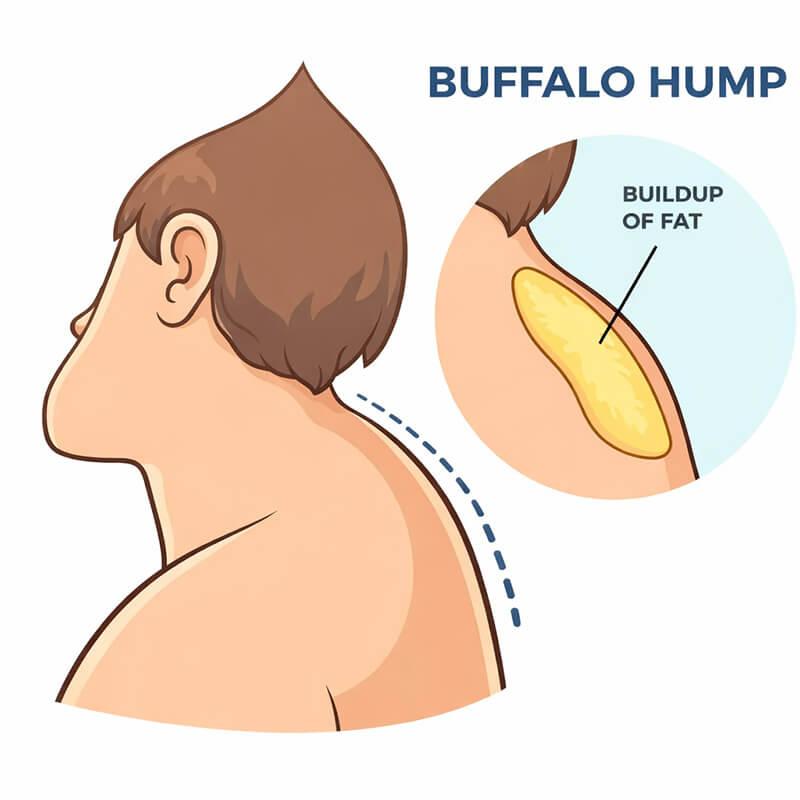
If you feel a firm, rounded fullness at the base of your neck, right between the shoulders, you may be dealing with what many people call a buffalo hump. A buffalo hump is a buildup of fat at the base of the neck, positioned above and between the shoulder blades. Medically, it’s known as dorsocervical fat pad. In many cases, buffalo hump liposuction can reduce this stubborn pocket of fat. It can also create a smoother neckline-to-upper-back transition, especially when diet, exercise, and posture changes haven’t made a meaningful difference.

At Seattle Plastic Surgery, our approach starts with the right diagnosis and the right plan. Because not every hump is only fat, and not every patient should go straight to surgery. Some cases need medical evaluation first, and that step protects your health and your result.
What is a Buffalo Hump? 

A buffalo hump is a buildup of fatty tissue on the upper back or lower neck area, creating a noticeable mound. It is described as a hump on the upper back or dorsocervical fat pad and notes that the cause can vary widely, from medication effects to hormonal conditions. Buffalo hump is not the same thing as a dowager’s hump, which is typically related to spinal curvature and kyphosis rather than fat. If you’re unsure what you have, you can consult our providers at Seattle Plastic Surgery. 

What Causes a Dorsocervical Fat Pad?

This is the step many people skip, but it’s one of the most important. A dorsocervical fat pad can be cosmetic, but it can also be a sign of an underlying condition or medication effect.

Several recognized causes include:

  • Long-term glucocorticoid use, for example, prednisone
  • High cortisol levels, cushing syndrome
  • Certain HIV medications
  • Obesity, often more generalized fat distribution
  • Certain genetic disorders and Madelung disease 

If Cushing syndrome is a concern, the NIDDK describes classic signs that can include increased fat around the base of the neck and a fatty hump between the shoulders. 

If HIV medication-related fat redistribution is relevant, sources define a dorsocervical fat pad as fat accumulation on the back of the neck between the shoulders and notes it may be linked to certain antiretroviral drugs. 

Why Does This Matter Before Liposuction? 

If the fat pad is driven by an ongoing hormonal issue or medication effect, it can recur, even after a technically perfect procedure, unless the underlying driver is addressed.

Can Weight Loss or Posture Fix it? 

Sometimes, but not always.

  • If the fullness is mainly related to overall weight gain, lifestyle changes may reduce it over time.
  • If the pad is fibrous or tied to other factors, it may persist even after weight loss. Obesity tends to cause more generalized fat deposition, not always a single isolated mound. 
  • If the issue is actually spinal curvature, liposuction won’t address the root cause.

A consultation can help determine what’s treatable fat versus something that needs a different plan.

What is Buffalo Hump Liposuction? 

Liposuction for buffalo hump is a targeted fat-removal procedure focused on the dorsocervical area. The goal is not to hollow the area out aggressively, it’s to reduce the bulk and reshape the contour so your upper back and neck look smoother and more proportional.

In general terms, the procedure involves:

  • Marking the treatment zone while you’re positioned for accurate contouring
  • Small incisions placed discreetly
  • Removal of fat with specialized techniques, often chosen based on how dense/fibrous the tissue feels
  • Contour refinement to avoid irregularities

Because this area can be more fibrous than the abdomen, the technique selection matters. That’s why experience in body contouring is a big deal for upper-back and neck contour concerns.

Who is a Good Candidate? 

You may be a strong candidate for buffalo hump liposuction if:

  • The mound is primarily fat, not bone or spinal curvature
  • Your weight is reasonably stable
  • Your skin quality is good enough to re-drape after reduction
  • You have realistic expectations (improvement, not “airbrushed perfection”)
  • You’ve ruled out, or are managing, medical contributors 

You may need additional evaluation first if:

  • You have symptoms that could suggest cortisol imbalance, i.e; cushing syndrome signs
  • You’re on long-term steroids or certain medications associated with dorsocervical fat pad changes 
  • You’re seeing rapid changes in fat distribution

What Difference is Seen Before and After Buffalo Hump Liposuction?  

Buffalo hump liposuction before and after depends on your underlying cause. 

  • Fat vs. fluid vs. a spinal or structural hump, 
  • the size and firmness of the hump, 
  • your skin elasticity, 
  • and the technique used (traditional lipo vs. power/ultrasound-assisted)
  • how well you follow compression and recovery instructions.

Patients Can Usually See the Following Changes: 

  • A flatter, smoother transition from neck to upper back
  • Better fit in collared shirts and fitted tops
  • A more balanced profile from the side
  • Improved confidence in photos and posture-forward clothing

What to Expect in the Timeline? 

  • Early swelling can temporarily mask definition
  • Contours typically refine progressively as swelling settles
  • Final shaping can take weeks to a few months (varies by person)

If there is loose skin or reduced elasticity, you may still see improvement. But the best approach might include skin-tightening options or combination planning.


What is the Cost of Buffalo Hump Liposuction? 

Buffalo hump liposuction cost is not one-size-fits-all. Pricing usually depends on:

  • The size and density of the dorsocervical fat pad
  • The technique needed for safe, smooth contouring
  • Anesthesia choice and surgical setting
  • Whether additional areas are treated at the same time

For a transparent starting point, Seattle Plastic Surgery provides a public pricing structure for liposuction on our site, and you can also review our full Cosmetic Surgery Pricing list. Your exact quote is always confirmed after an exam and surgical plan.

Looking for Buffalo Hump Liposuction Near Me? The next step is to choose a clinic that:

  • Has deep experience with body contouring
  • Will screen for medical causes before treating it as “just fat”
  • Can show real, consistent contour results
  • Performs procedures in an appropriate, professional surgical environment

Seattle Plastic Surgery serves patients locally and across the region, and many people begin with our Liposuction in Seattle & Tacoma overview before booking a consultation.

Choosing the Right Provider 

Selecting the right surgeon plays a major role in achieving safe, natural-looking results from buffalo hump liposuction. If you’re considering treatment in Seattle, our team at Seattle Plastic Surgery can evaluate the cause of your hump and recommend the best approach for your anatomy and goals.

To book your consultation, call 206-324-1120 or visit Seattle Plastic Surgery.

FAQs 

Can Cushing syndrome cause a buffalo hump? 

Yes. A fatty hump between the shoulders as one of the potential signs/symptoms seen with high cortisol over time. 

Can HIV medications cause a dorsocervical fat pad?

They can be associated in some cases. Dorsocervical fat pad accumulation may be due to use of some antiretroviral drugs. 

Will buffalo hump liposuction come back?

It can if the underlying driver remains, for example, an untreated hormonal issue or a continuing medication effect. That’s why medical screening matters before surgery. 

Is buffalo hump liposuction a weight-loss procedure?

No. Liposuction is designed for contouring and targeted fat removal, not overall weight loss. Many practices emphasize liposuction is best for stubborn deposits rather than large-scale weight reduction.

How do I estimate buffalo hump liposuction cost?

Start with factors like area size, technique, and anesthesia needs, then confirm with a consultation. You can also review Seattle Plastic Surgery’s Cosmetic Surgery Pricing as a reference point.

Contact Us

    Best time to contact? AnytimeMorningAfternoonEvening

    Still Have Questions? 

    Give us a call at 206-739-0355. Chat by clicking the icon in the lower left hand corner of your screen. Additionally, you can  Contact Us by filling out the form below.