
Belt Lipectomy
with Dr. Patel

with Dr. Patel
Major weight loss can be life‑changing, but it often leaves behind significant folds of loose skin around the abdomen, flanks, lower back, and buttocks. Federal coverage guidelines note that excess skin after large weight loss is virtually impossible to correct with further dieting, exercise, or additional weight loss alone and can interfere with walking, hygiene, and daily activities.
A full body lift after massive weight loss, also called a belt lipectomy or circumferential body lift, is a 360‑degree contouring procedure that removes a ring of excess skin and fat around the lower trunk. It is commonly performed as part of post‑weight‑loss body contouring to address both appearance and function.
At our Seattle, WA and Tacoma locations, Seattle Plastic Surgery offers belt lipectomy as an option for patients who have already done the hard work of losing weight and now want a more stable, comfortable body contour.
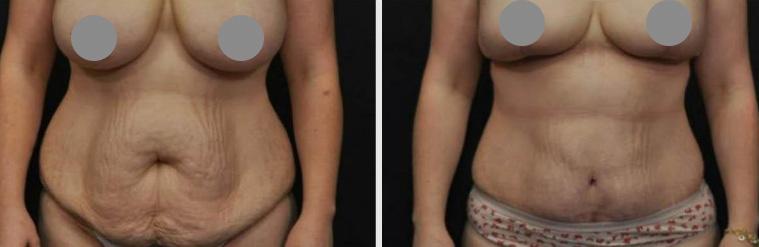

Belt lipectomy can be grouped under body lift and body‑contouring surgery performed after major weight loss. In this operation, the surgeon removes a circumferential belt of tissue from around the waistline, typically including:
A belt lipectomy is often designed to include a formal abdominoplasty tummy tuck within the same operation, so the front of the abdomen is tightened at the same time that the sides and back are lifted. Because it treats the lower trunk as a single unit, a full body lift can address skin redundancy that extends all the way around the body, something a standard tummy tuck alone cannot do.

Body‑contouring surgery after major weight loss is generally considered when excess skin causes both aesthetic and functional concerns. National coverage policy notes that large overhanging skin folds can lead to:
People who lose weight, whether through bariatric surgery or lifestyle changes, may notice that stretched skin does not shrink back, especially around the lower abdomen, hips, and back. Clinical guidance recommends that body‑contouring procedures be deferred until weight has been stable for a period of time. For post‑bariatric patients, waiting at least 18 months after bariatric surgery and ensuring weight has been stable for at least 6 months; similar stability is recommended for people who lost weight without surgery.
During consultation, we review your health, weight history, and specific areas of concern to determine whether a belt lipectomy, or a staged combination of procedures, is appropriate for you.

Government and specialty guidelines focus on thorough preoperative assessment for patients seeking removal of excess skin and fat after massive weight loss. Recommended screening includes evaluation for nutritional deficiencies, diabetes, hernias, reflux disease, and mental health conditions, as well as overall medical readiness for a long operation.
In our practice, planning typically includes:
We aim to build a surgical plan that respects safety, balances your priorities, and fits within evidence‑based standards for post‑weight‑loss body contouring.
A belt lipectomy is performed under general anesthesia. The procedure involves removing excess skin and fat around the lower trunk to reduce laxity and improve contour, often combined with abdominoplasty techniques such as repositioning the navel and tightening the abdominal wall.
In broad terms, surgery usually involves:
Because it is a comprehensive procedure, belt lipectomy is usually performed in a hospital or accredited surgery center, with a team that may include anesthesiologists, nurses, and other specialists.
After body‑contouring surgery, people typically see early results soon after the operation, but swelling and wound healing can take about three months, and final scar maturation may continue for up to two years. Maintaining a healthy weight and exercising regularly helps preserve the surgical result.
For a full body lift, you should expect:
Research cited by the National Library of Medicine indicates that body‑contouring surgery after major weight loss can significantly improve long‑term health‑related quality of life and satisfaction with appearance compared with weight‑loss patients who do not undergo contouring procedures.
Still, this is a major operation with a substantial recovery period. We will review timelines, activity restrictions, and follow‑up in detail so you know what to expect.
All surgery carries risk. A meta‑analysis of circumferential lower‑trunk contouring (including belt lipectomy) found an overall complication rate of about 37%, with common problems such as fluid collections (seromas), wound separation (dehiscence), infection, skin‑edge loss, and blood clots.
It is advised to contact your surgeon after body‑contouring surgery if you develop shortness of breath, chest pain, irregular heartbeat, fever, or signs of infection (increasing redness, pain, swelling, or foul drainage from the incision).
Our team at Seattle Plastic Surgery focuses on careful patient selection, preoperative optimization, and close follow‑up to reduce these risks as much as possible, but it is important to understand that complications remain possible even in experienced hands.
Government coverage policies distinguish between cosmetic surgery (performed to change normal appearance) and reconstructive surgery (performed to improve function or correct deformities caused by disease, trauma, or massive weight loss). Many insurance plans do not pay for plastic surgery after weight loss and may not cover treatment for complications unless specific criteria are met.
In some cases, such as when excess skin causes chronic rashes, infection, or functional disability, portions of body‑contouring surgery may be considered reconstructive. Coverage, however, varies widely by insurer and policy. We encourage you to review your benefits and, when needed, work with us to submit any required documentation.
At Seattle Plastic Surgery, our focus is on providing safe, high-quality belt lipectomy care to individuals throughout Seattle and Tacoma. Choosing us means choosing a team that prioritizes your comfort, understands the physical changes that come with major weight loss, and is committed to helping you move forward with confidence.
Every full body lift plan is shaped around your goals, medical history, and the specific changes you hope to achieve.
From your first conversation with our team to your post-surgery follow-ups, we make sure you feel supported, informed, and heard.
We use current, evidence-based techniques to deliver precise contouring and reliable outcomes for post-weight-loss patients.
If you’re ready to explore whether a belt lipectomy is the right next step, you can reach out to our team online or by calling 206-338-5299 to schedule a consultation. Visit our website to Get an Instant Quote using Price Simulator Now to know more about our services and procedures.
A tummy tuck focuses on the front of the abdomen, tightening skin and often repairing the abdominal wall. A belt lipectomy extends this concept all the way around the torso: excess skin and fat are removed from the abdomen, flanks, and lower back, and the procedure frequently incorporates a full abdominoplasty within the larger circumferential lift.
Patients who lose weight without surgery maintain a stable weight for at least six months before undergoing procedures such as panniculectomy or related body‑contouring. For patients who lose weight after bariatric surgery, policy suggests waiting at least 18 months after the bariatric operation and ensuring weight has been stable for at least the most recent six months.
A large meta‑analysis of belt lipectomy found that roughly one‑third of patients experienced at least one complication. The most frequent were seromas (fluid collections under the skin) and wound separation, followed by infection, skin‑edge loss, bleeding, and blood clots in the legs or lungs.
Many insurance plans do not pay for plastic surgery after weight loss and may also exclude coverage for treating complications related to such procedures.
Give us a call at 206-739-0355. Chat by clicking the icon in the lower left hand corner of your screen. Additionally, you can Contact Us by filling out the form below.