

Tummy tuck surgery is getting more attention in 2026, and it is not limited to women after pregnancy. More men are also booking consultations, especially after major weight loss, lifestyle changes, or a renewed focus on fitness. In cities like Seattle, where hiking, gyms, and outdoor culture are part of daily life, people often reach a point where diet and exercise improve weight but do not fully fix loose skin or abdominal stretch. That is where a tummy tuck surgery in Seattle can help.
This guide breaks down mini vs full tummy tuck, explains what each option really does, and shows what realistic results and recovery look like.
What Is a Tummy Tuck?
A tummy tuck or abdominoplasty is a surgery that removes loose skin from the abdomen and may tighten separated abdominal muscles to improve shape. It is often chosen after pregnancy or weight loss when skin does not shrink back and the belly stays loose or rounded.
What Is a Mini Tummy Tuck?
A mini tummy tuck is a smaller version of abdominoplasty that focuses on the lower abdomen, usually the area below the belly button. It is designed for people who have a small amount of loose skin or a lower belly “pouch,” but do not need full abdominal reshaping.
If your main concern sits low and your upper abdomen still looks fairly tight, a mini tummy tuck in Seattle may be enough.
Who Is a Good Candidate?
A mini tummy tuck is often a good fit for:
- Mild loose skin below the belly button
- A small lower belly bulge that does not improve with workouts
- Men who carry stubborn lower abdominal fullness with mild skin looseness
- Patients who do not have major muscle separation
What It Fixes
A mini tummy tuck typically addresses:
- The lower abdomen only
- Limited skin removal compared to a full tummy tuck
- Minor tightening in select cases, but major muscle repair is not the main focus for most patients
Mini Tummy Tuck Recovery Timeline
Recovery is usually quicker because the surgery is smaller, but it still requires planning and patience:
- 1 week: Light activity only
- 2 to 3 weeks: Many patients return to desk work, depending on comfort and surgeon guidance
- 4 to 6 weeks: Gradual return to full exercise after clearance
Mini tummy tuck results before after
Seeing real results helps make the differences easier to understand because photos clearly show what the procedure actually improves. In most mini tummy tuck before-and-after images, the biggest change appears in the lower abdomen, where loose skin and a small pouch look smoother and flatter after surgery. These comparisons also help set realistic expectations, since they show that a mini tummy tuck focuses on subtle lower-belly contouring rather than dramatic full-abdomen reshaping.
Case 11 – Mini Tummy Tuck Before & After Result of Seattle Patient
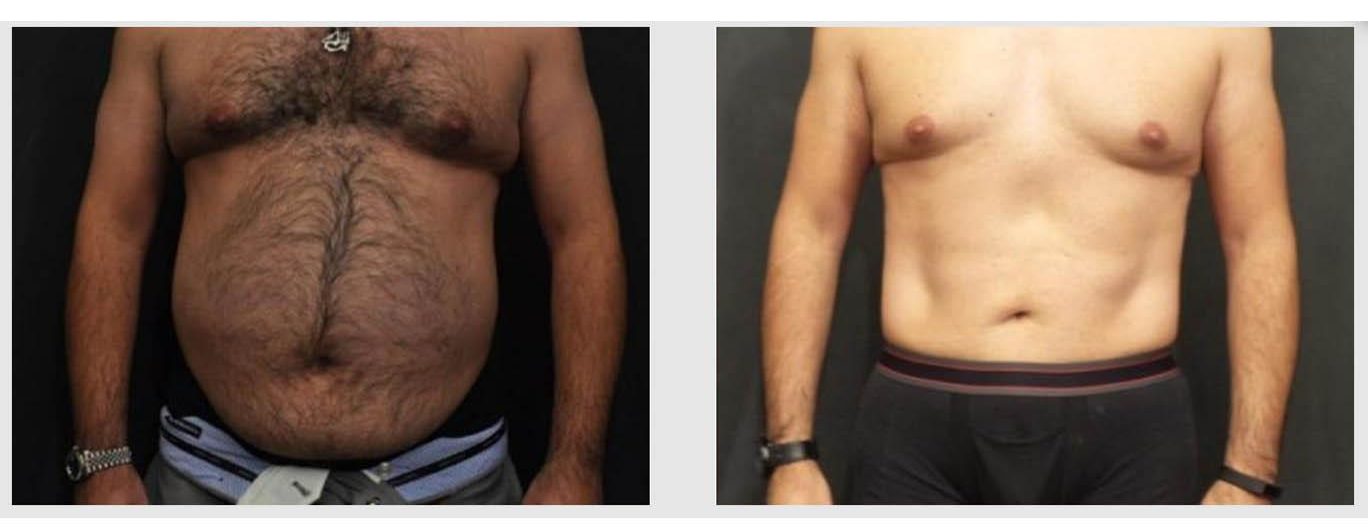 This 44-year-old patient first came to our office in late 2013 after achieving significant personal weight loss goals. While he had made impressive progress on his own, he still struggled with stubborn fat and loose skin that did not respond to diet and exercise.
In 2014, liposuction of the upper and lower abdomen and flanks was performed to enhance his weight loss results and improve overall contour. This step alone helped refine his shape and boosted his confidence.
By 2016, he decided to move forward with a mini tummy tuck to address remaining loose skin in the lower abdomen. Because his concern was limited to the area below the belly button, only a mini tummy tuck was required rather than a full procedure. At the same time, gynecomastia surgery was performed to create better chest definition and balance his overall appearance.
His before-and-after photos show a flatter lower abdomen, improved body proportions, and a more defined chest. This case demonstrates how a mini tummy tuck can be an excellent option for patients who have achieved weight loss but still want smoother, tighter results in the lower belly area.
What Is a Full Tummy Tuck?
A full tummy tuck reshapes the entire abdomen, including the upper and lower areas. This approach is usually recommended when loose skin extends above the belly button, when the abdomen has lost firmness, or when there is muscle separation. Because it addresses more tissue, it also tends to create the most complete change.
If you are seeing looseness both above and below the navel, a mini tummy tuck usually will not be enough, and this is where a full tummy tuck becomes the more practical option.
Who Needs a Full Tummy Tuck?
A full tummy tuck is commonly recommended for:
- Significant loose skin
- Muscle separation (diastasis recti)
- Major weight loss patients
- Post-pregnancy abdominal changes
- Men after major weight loss who have both loose skin and poor abdominal support
What It Fixes
A full tummy tuck can address:
- Upper and lower abdominal loose skin
- Repair of muscle separation when present
- Belly button repositioning (common in full tummy tuck)
- A more dramatic contour change overall
Full Tummy Tuck Recovery Timeline
Because the procedure is more extensive, recovery is typically longer:
- 2 weeks: many people take time off work
- Up to 6 weeks: limited lifting and exercise
- 3 to 6 months: swelling continues improving, shape becomes more refined
Tummy Tuck Before and After
Here is a real result from our patient gallery. The before-and-after photos highlight a smoother lower abdomen and a more contoured waist after abdominoplasty with flank liposuction.
Case 06 – Tummy Tuck Before and After Photos
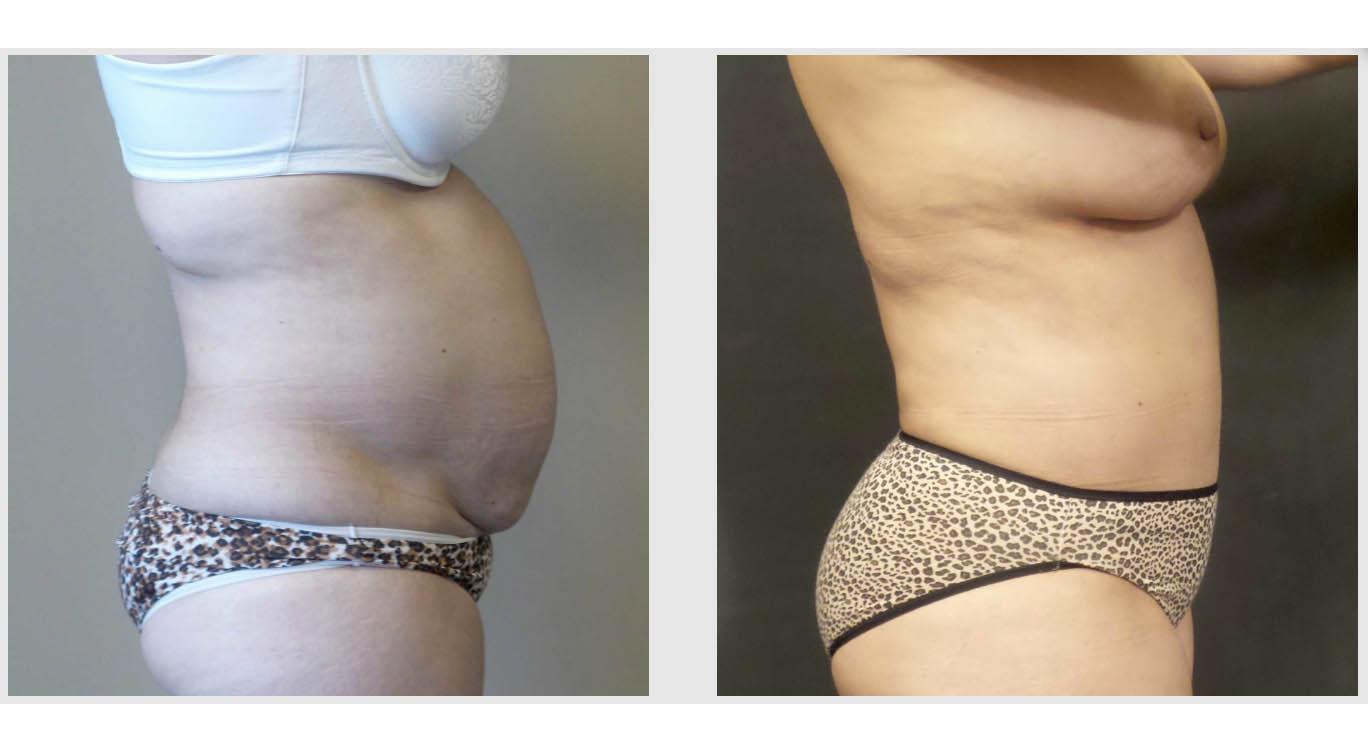 This 47-year-old patient came to Seattle Plastic Surgery wanting to improve the appearance of her abdomen and achieve a flatter, more toned stomach. After a detailed consultation, Dr. Jonov recommended a tummy tuck with muscle plication to address stretched abdominal muscles and excess skin.
Her before-and-after photos show a smoother lower abdomen, a firmer midsection, and a more contoured waistline. By tightening the underlying muscles and removing loose skin, Dr. Jonov was able to create natural-looking, balanced results that align with the patient’s goals.
Individual results may vary. Photos are shared with patient consent.
Mini vs Full Tummy Tuck: Side-by-Side Comparison
When readers are deciding between procedures, a table makes the differences clearer in seconds. After the table, it helps to add one short paragraph that explains what the table means in real life.
|
Feature |
Mini Tummy Tuck | Full Tummy Tuck |
|
Incision |
Smaller | Hip-to-hip (typical) |
| Muscle Repair | Usually No |
Yes (when needed) |
|
Skin Removal |
Lower only | Upper and Lower |
| Recovery | Faster |
Longer |
| Best For | Mild loose skin |
Major excess skin and muscle laxity |
Mini tummy tuck vs full tummy tuck comes down to where your loose skin sits and whether muscle repair is needed. A mini mainly improves the lower abdomen, while a full tummy tuck reshapes the full midsection.
Mini vs Full Tummy Tuck Results: Realistic Expectations for 2026 Patients
It helps to think of results in phases. Early results can look promising, but swelling and tightness can hide the final shape for weeks. Most patients see steady improvement as swelling reduces and tissue settles. Here is what is realistic for patients seeking tummy tuck in 2026:
- Swelling: Common in the first weeks, with ongoing improvement for months
- Scar placement: Typically low and planned to sit under underwear or swimwear, but scars are part of the procedure
- Before-and-after changes: The biggest visible difference is usually the lower abdomen and waistline contour
- Final results: Often take several months, and the look can keep refining as swelling fades
Results depend on skin quality, muscle laxity, and surgeon expertise.
Tummy Tuck for Men: Why Male Procedures Are Rising in 2026
Men are increasingly seeking abdominal contouring for a straightforward reason: weight loss and strength training can reduce fat, but they cannot remove stretched skin. Many men also want a more defined midsection, especially after losing a large amount of weight. Others want to correct the lower abdomen that stays rounded even when they are fit.
This trend is not limited to one city, but in Seattle it shows up often because people stay active and notice when the abdomen does not match the rest of their progress.
What Causes Loose Abdominal Skin in Men?
Loose abdominal skin in men is usually caused by:
- Major weight loss (skin does not fully retract)
- Aging (skin becomes less elastic)
- Genetics (some skin stretches more easily)
- Muscle laxity or separation in some cases
- Fat distribution changes over time
Mini or Full Tummy Tuck: How to Choose?
A simple way to decide is to look at two things: where the loose skin sits and whether the abdomen feels weak or stretched.
Choose Mini If:
- Loose skin is only below the belly button
- No major muscle separation
- Small lower belly pocket is the main concern
Choose Full If:
- Loose skin is above and below the belly button
- Muscle separation is present
- You have had major weight loss or pregnancy changes
If you are unsure, that is normal. A consultation helps confirm whether your upper abdomen needs tightening or if the lower-only approach will still look balanced.
Can Liposuction Replace a Tummy Tuck?
Liposuction removes fat, but it does not tighten loose skin or repair separated abdominal muscles. If excess skin or muscle laxity is the main issue, a tummy tuck is usually needed.
Tummy Tuck Cost in Seattle: 2026 Update
At Seattle Plastic Surgery, a full tummy tuck starts at $7,485. A mini tummy tuck often costs less than a full tummy tuck because they involve less skin removal and a smaller surgical plan. Still, the final price depends on factors like how much correction is needed, whether liposuction is added, facility fees, and the surgeon’s experience.
What to Expect During Recovery
Recovery is easier when you know what is normal week by week. While every patient heals differently, the general pattern is consistent.
- Week 1: swelling, tightness, slower movement; some patients have drains based on the surgical plan
- Week 2 to 3: walking becomes easier, posture improves, many return to desk work
- Week 4 to 6: light workouts may resume with clearance, heavy lifting still limited
- Around 3 months: swelling is noticeably improved, and the contour looks more natural
Men often recover well when they follow lifting limits and wear compression garments as directed, since trying to push through too early can slow healing.
Risks and Safety Considerations
A tummy tuck is a major surgery, so safety matters just as much as the final appearance. Common risks include seroma (fluid collection), infection, poor scarring, bleeding, and delayed healing. These risks can be minimized when surgery is performed in an accredited facility and when patients closely follow pre-operative and post-operative instructions.
For patients considering tummy tuck surgery Seattle, choosing a board-certified surgeon with extensive experience in male and female body contouring is essential for safe, natural-looking results.
At Seattle Plastic Surgery, Dr. Craig Jonov is board certified by the American Board of Cosmetic Surgery and performs procedures in a JCAHO-accredited surgical facility. He is also listed as a Diplomate and Examiner with the American Board of Cosmetic Surgery, reflecting his involvement in maintaining professional standards within the field. Experience, proper surgical planning, and careful aftercare all play an important role in minimizing complications and supporting a smooth recovery.
Schedule Your Tummy Tuck Surgery in Seattle
If you are comparing mini vs full tummy tuck, the best next step is a consultation at Seattle Plastic Surgery. Dr. Jonov will evaluate skin laxity, muscle support, and overall balance. Call us at 206-324-1120 to book an appointment.
FAQs
Is a mini tummy tuck worth it?
A mini tummy tuck is worth it when the loose skin is mainly below the belly button and the upper abdomen still looks firm. If you have loose skin above the navel, a mini often will not give a balanced result.
How painful is a full tummy tuck?
Most people describe the first week after a full tummy tuck surgery in Seattle as tight and sore rather than sharp pain. Discomfort usually improves steadily with rest, compression, and proper medication.
Do men get tummy tucks?
Yes. Many men choose tummy tuck surgery in Seattle after weight loss when skin does not tighten and the lower abdomen stays loose.
How long do results last?
Tummy tuck results can last many years if weight stays stable. Aging still happens, but large weight changes can stretch the abdomen again.
Will insurance cover it?
Most tummy tucks are cosmetic and not covered by insurance. Coverage is more likely only in rare cases where skin causes medical problems, and it depends on the insurer.

Dr. Craig Jonov is a board-certified cosmetic surgeon based in Lynnwood, serving the Seattle area. With extensive training in facial, breast, and body procedures, he combines surgical expertise with artistic precision to achieve natural-looking results. Dr. Jonov also specializes in advanced injectable treatments and non-surgical rejuvenation techniques. Recognized for his commitment to safety and innovation, he is an active member of leading cosmetic surgery organizations and is dedicated to providing personalized care tailored to each patient’s goals.